From the clinic day to the claim, as designed.
Three short demonstration films with sample data, without narration. They show the intended workflow for the physician, the surgical coordinator, and the biller. Not every step is available yet: each chapter lists the current availability of what it shows.
OpAgent inside athenaOne.
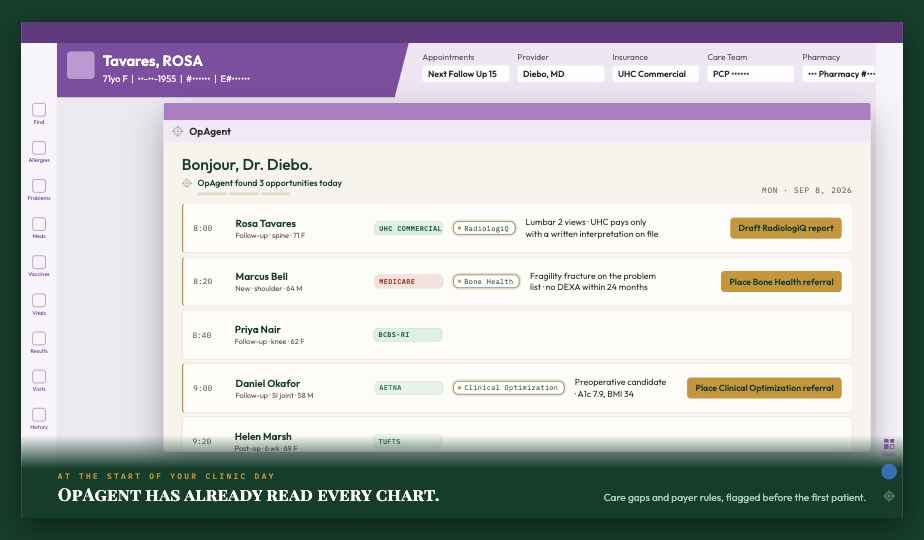
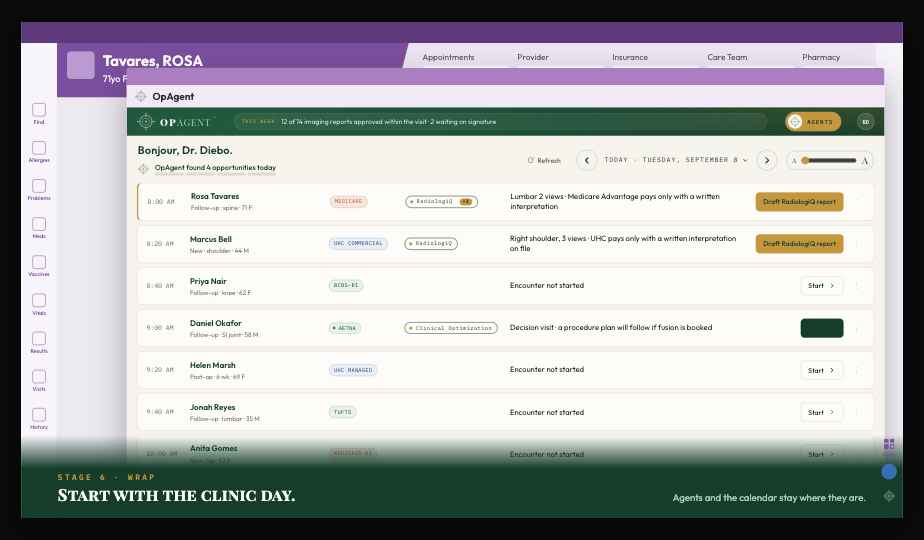
The physician opens the daily worklist in athenaOne. Imaging-report drafts, bone-health flags, and pre-op readiness items appear only for patients where something is due. The physician reviews each item, and approved work is saved to the chart.
A review of a design-partner practice's records, 2018 to 2025.
The physician finishes the visit once.
A demonstration of a workflow in development. The physician records or dictates the visit, or starts from the note already in the chart. OpAgent drafts the note, lists documentation questions, and proposes codes with the supporting text beside each. The physician approves the note and the coding, and a scheduled surgical case is handed to the surgical coordinator.
The surgical case, note to codes.
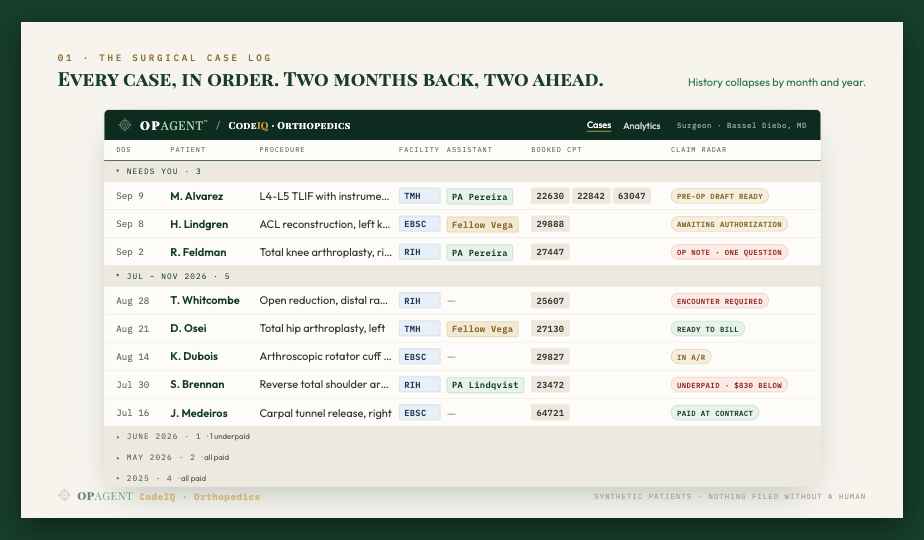
A demonstration of a workflow in development. Before surgery, a preoperative draft is prepared from the surgical plan; it is a starting point, not the operative record. After surgery, the surgeon edits and signs the final operative note, codes are proposed from what the signed note documents, and the biller reviews them before the claim is sent.
Payment review, as designed.
This part is in development. When a payment comes back, it is compared with what was billed and contracted. Discrepancies are listed with their evidence, and a biller decides whether to appeal, follow up on documentation, or take no action.
See how OpAgent fits your practice.
Walk through the workflow with our team and discuss your EHR, priorities, and rollout options. Prefer a practice analysis? It is a scoped review of historical clinical and billing data, and it begins after the scope, required agreements, and authorized data access are in place. Choose either below.